

 扫描二维码添加客服微信
 扫描二维码关注
中国美食英语海报-要一则初一的关于“春节”的英语海报。(中英文对照)急用!
关于端午节的英文海报-端午节手抄报英语版
求写一张关于端午节的英语海报
TheDragonBoatFestival,alsocalledDoubleFifthFestival,,theothertwobeingtheAutumnMoonFestivalandChineseNewYear。,butbecauseofthemisdeedsofjealousrivalsheeventuallyfellintodisfavorintheemperor'scourt。Unabletoregaintherespectoftheemperor,,thelocalpeoplelivingadjacenttotheMiLoRiverrushedintotheirboatstosearchforhimwhilethrowingriceintothewaterstoappeasetheriverdragons。AlthoughtheywereunabletofindChuYuan,theireffortsarestillcommemoratedtodayduringtheDragonBoatFestival。端午节的由来端午节,又称为五五节,因为端午节是在农历的五月五日,是三个重要的中国节庆之一,其他两个分别是中秋节和农历新年。这个节日的由来是古代中国有一位博学多闻的官吏屈原,他是一位爱民而且又受到尊崇的官吏,但是由於一位充满嫉妒的官吏陷害,从此在朝廷中被皇帝所冷落。由於无法获得皇帝的重视,屈原在忧郁的情况下投汨罗江自尽。由於对屈原的爱戴,汨罗江畔的居民匆忙的划船在江内寻找屈原,并且将米丢入汨罗江中,以平息汨罗江中的蛟龙。即使他们当时并没有找到屈原,但是他们的行为,直到今天在端午节的时候,仍然被人们传颂纪念著。'。,peanut,eggyolk,。AyTasoThetimeofyearoftheDragonBoatFestival,thefifthlunarmoon,,calledAyTsao,。风俗习惯端午节最重要的活动是龙舟竞赛,比赛的队伍在热烈的鼓声中划著他们多彩的龙舟前进。这项活动的灵感是来自於当时汨罗江畔的居民,在江中划船救屈原,而这个传统也一直保持了数个世纪。在端午节时受欢迎的食物就是粽子,粽子是以米包著肉、花生、蛋黄及其他材料,再以竹叶包裹。而粽子的传统则来由於汨罗江边的渔夫,将米丢入江中平息江中的蛟龙,希望他们不要将屈原吃掉。农历的五月,也就是端午节的这个时节,对中国人而言,除了屈原的故事还有许多其他重要的意义。许多中国人相信五月是一年中容易引发疾病的危险时节,因此必须有许多防备家人生病的措施。许多家庭会将一种特别的植物-艾草挂在门口,作为保护之用,而人们也会挂带香包,它是以含有多种香味的药用植物所做成,也可以保护人们远离疾病。
关于端午节的英文手抄报
端午节的英文手抄报:
TheDragonBoatFestival,alsoknownasDuanwuFestival,,datingbackover2000yearstotheWarringStatesperiod.
ThemostfamouslegendassociatedwiththefestivalisthatofQuYuan,.
In278BC,,buteventuallyhebecamesodisillusionedwiththestateoftheworldthathedecidedtodrownhimselfintheMiluoRiver.
ThelocalpeoplewhoadmiredandrespectedQuYuanracedtotheriverintheirboats,,stickyricewrappedinbambooleaves,intotherivertofeedthefishandpreventthemfromeatingQuYuan'sbody.
Today,theDragonBoatFestivaliscelebratedwithdragonboatraces,theeatingofzongzi,.
TheDragonBoatFestivalisanimportantholidaythatcelebratesthespiritofunity,courage,,andtocometogetherasacommunitytocelebratetheirculturalheritage.
端午节习俗:
端午节是一个重要的传统节日,每年农历五月初五。端午节有很多习俗,其中最为著名的是吃粽子和赛龙舟。粽子是用粘米粉、糯米、各种馅料包裹在竹叶中蒸煮而成的美食,代表着家人之间的团圆和友谊的粘合。
赛龙舟则是一项古老的水上竞技运动,象征着勇气、团结和协作精神。此外,还有挂艾草、佩香囊、赛鸽子、喝雄黄酒等传统习俗,均有驱除瘟疫、祈求平安的寓意。
端午节手抄报英语版
端午节手抄报英语版
农历的五月初五是端午节。在中国,端午节有着很悠久的历史,同时也是一个很重大的节日。以下是关于端午节手抄报英语版,希望大家认真阅读!
端午节详细介绍英文:
thedragonboatfestival(端午节)isalunarholiday,occurringonthefifthdayofthefifthlunarmonth
thechinesedragonboatfestivalisasignificantholidaycelebratedinchina,.
端午节详细介绍中文:农历的`五月初五是端午节。在中国,端午节有着很悠久的历史,同时也是一个很重大的节日。人们会以赛龙舟的比赛活动来庆祝端午节,参赛小组划着龙舟朝着鼓声前进,最终达到终点。
端午节的英文资料
TheDragonBoatFestival,alsocalledtheDuanwuFestival,,thefestivalhasbeenmarkedbyeatingzongzi(glutinousrice(糯米)wrappedtoformapyramidusingbambooorreedleaves)andracingdragonboats.
Thefestivalisbestknownforitsdragon-boatraces,(赛舟会)commemoratesthedeathofQuYuan,,duringtheWarringStatesPeriod(475-221BC)(战国时期).Hewasupright,,whenadishonestandcorruptprincevilifiedQu,,,thestatedeclinedandwaseventuallyconqueredbytheStateofQin.
,thespiritofQuappearedandtoldthemournersthatahugereptile(爬行动物).
DuringtheDuanwuFestival,,lotusseeds(莲子),chestnuts(栗子),,boundwithakindofraffiaandboiledinsaltwaterforhours.
Thedragon-boatracessymbolizethemanyattemptstorescueandrecoverQu',withabeamofabout5.5feet,accommodatingtwopaddlersseatedsidebyside.
Awoodendragonheadisattachedatthebow,andadragontailatthestern(船尾).Abannerhoistedonapoleisalsofastenedatthesternandthehullisdecoratedwithred,,gong(铜锣)beatersandcymbal(铙钹),,villagesandorganizations,andthewinnersareawardedmedals,banners,jugsofwineandfestivemeals.
;
要一则初一的关于“春节”的英语海报。(中英文对照)急用!
The Origin of Chinese New Year
The Chinese New Year is now popularly known as the Spring Festival because it starts from the Begining of Spring (the first of the twenty-four terms in coodination with the changes of Nature). Its origin is too old to be traced. Several explanations are hanging around. All agree, however, that the word Nian, which in modern Chinese solely means "year", was originally the name of a monster beast that started to prey on people the night before the beginning of a new year.
One legend goes that the beast Nian had a very big mouth that would swallow a great many people with one bite. People were very scared. One day, an old man came to their rescue, offering to subdue Nian. To Nian he said, "I hear say that you are very capable, but can you swallow the other beasts of prey on earth instead of people who are by no means of your worthy opponents?" So, it did swallow many of the beasts of prey on earth that also harrassed people and their domestic animals from time to time.
After that, the old man disappeared riding the beast Nian. He turned out to be an immortal god. Now that Nian is gone and other beasts of prey are also scared into forests, people begin to enjoy their peaceful life. Before the old man left, he had told people to put up red paper decorations on their windows and doors at each year's end to scare away Nian in case it sneaked back again, because red is the color the beast feared the most.
From then on, the tradition of observing the conquest of Nian is carried on from generation to generation. The term "Guo Nian", which may mean "Survive the Nian" becomes today "Celebrate the (New) Year" as the word "guo" in Chinese having both the meaning of "pass-over" and "observe". The custom of putting up red paper and firing fire-crackers to scare away Nian should it have a chance to run loose is still around. However, people today have long forgotten why they are doing all this, except that they feel the color and the sound add to the excitement of the celebration.
----------------------------------------------------------------------------------------------------------------------
The Spring Festival is the most important festival for the Chinese people and is when all family members get together, just like Christmas in the West. All people living away from home go back, becoming the busiest time for transportation systems of about half a month from the Spring Festival. Airports, railway stations and long-distance bus stations are crowded with home returnees.
Strictly speaking, the Spring Festival starts every year in the early days of the 12th lunar month and will last till the mid 1st lunar month of the next year. Of them, the most important days are Spring Festival Eve and the first three days. The Chinese government now stipulates people have seven days off for the Chinese Lunar New Year.
Many customs accompany the Spring Festival. Some are still followed today, but others have weakened.
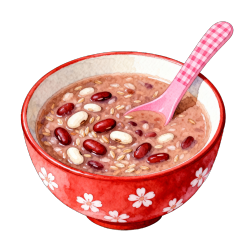
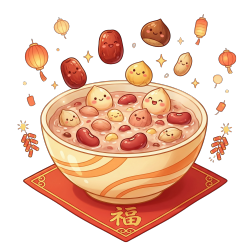
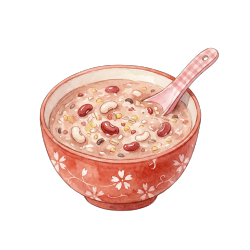
On the 8th day of the 12th lunar month, many families make laba porridge, a delicious kind of porridge made with glutinous rice, millet, seeds of Job's tears, jujube berries, lotus seeds, beans, longan and gingko.
The 23rd day of the 12th lunar month is called Preliminary Eve. At this time, people offer sacrifice to the kitchen god. Now however, most families make delicious food to enjoy themselves.
After the Preliminary Eve, people begin preparing for the coming New Year. This is called "Seeing the New Year in".
Store owners are busy then as everybody goes out to purchase necessities for the New Year. Materials not only include edible oil, rice, flour, chicken, duck, fish and meat, but also fruit, candies and kinds of nuts. What's more, various decorations, new clothes and shoes for the children as well as gifts for the elderly, friends and relatives, are all on the list of purchasing.
Before the New Year comes, the people completely clean the indoors and outdoors of their homes as well as their clothes, bedclothes and all their utensils.
Then people begin decorating their clean rooms featuring an atmosphere of rejoicing and festivity. All the door panels will be pasted with Spring Festival couplets, highlighting Chinese calligraphy with black characters on red paper. The content varies from house owners' wishes for a bright future to good luck for the New Year. Also, pictures of the god of doors and wealth will be posted on front doors to ward off evil spirits and welcome peace and abundance.
The Chinese character "fu" (meaning blessing or happiness) is a must. The character put on paper can be pasted normally or upside down, for in Chinese the "reversed fu" is homophonic with "fu comes", both being pronounced as "fudaole." What's more, two big red lanterns can be raised on both sides of the front door. Red paper-cuttings can be seen on window glass and brightly colored New Year paintings with auspicious meanings may be put on the wall.
People attach great importance to Spring Festival Eve. At that time, all family members eat dinner together. The meal is more luxurious than usual. Dishes such as chicken, fish and bean curd cannot be excluded, for in Chinese, their pronunciations, respectively "ji", "yu" and "doufu," mean auspiciousness, abundance and richness. After the dinner, the whole family will sit together, chatting and watching TV. In recent years, the Spring Festival party broadcast on China Central Television Station (CCTV) is essential entertainment for the Chinese both at home and abroad. According to custom, each family will stay up to see the New Year in.
Waking up on New Year, everybody dresses up. First they extend greetings to their parents. Then each child will get money as a New Year gift, wrapped up in red paper. People in northern China will eat jiaozi, or dumplings, for breakfast, as they think "jiaozi" in sound means "bidding farewell to the old and ushering in the new". Also, the shape of the dumpling is like gold ingot from ancient China. So people eat them and wish for money and treasure.
Southern Chinese eat niangao (New Year cake made of glutinous rice flour) on this occasion, because as a homophone, niangao means "higher and higher, one year after another." The first five days after the Spring Festival are a good time for relatives, friends, and classmates as well as colleagues to exchange greetings, gifts and chat leisurely.
Burning fireworks was once the most typical custom on the Spring Festival. People thought the spluttering sound could help drive away evil spirits. However, such an activity was completely or partially forbidden in big cities once the government took security, noise and pollution factors into consideration. As a replacement, some buy tapes with firecracker sounds to listen to, some break little balloons to get the sound too, while others buy firecracker handicrafts to hang in the living room.
The lively atmosphere not only fills every household, but permeates to streets and lanes. A series of activities such as lion dancing, dragon lantern dancing, lantern festivals and temple fairs will be held for days. The Spring Festival then comes to an end when the Lantern Festival is finished.
China has 56 ethnic groups. Minorities celebrate their Spring Festival almost the same day as the Han people, and they have different customs.
中国新年的起源
农历新年是现在通常被称为春节,因为它开始从最初的弹簧(第24术语的变化与大自然的共用。它的起源是太老了,不能被追踪。有几种解释闲荡。所有的同意,无论如何,这个词,而仅仅意味着现代汉语中“年”,最初的名字的怪物的兽,开始在人们的前一晚,新的一年的开始。
传说有一个叫“年”的怪兽,有一个大嘴巴,会吞下很多人用一口。人们都很害怕。有一天,一位老人来拯救他们,提供制服撵出来。他对年说:“我听到说你很能干,但你可以吞食猎物的地球上其他牲畜代替人绝不是你值得对手吗?”所以,它吞下很多的野兽,地球也harrassed捕食家畜,他们的确是的爱好艺术的确是的人。
之后,这位老人消失骑的怪兽。他原来是不朽的神。如今年过去了,其他野兽的猎物还害怕进入森林,人们开始享受宁静的生活。那位老人离开前,他曾告诉人们把红纸上装饰窗户,每年年末都来吓跑年的情况下溜回,因为红的颜色是兽害怕。
从那时起,传统的观察征服年进行,直到万代。术语“过年”,这也许意味着“存活”成为今天的“庆祝”(新)年度“郭”在中国拥有两"的意思pass-over”和“观察”。习惯的贴红纸,方鞭炮来吓跑年应该有机会还健在。松然而,今天的人们已经遗忘他们为什么要这么做的原因,只是觉得色彩和声音增添了刺激的庆祝活动。
春节是中国最重要的节日,人们是所有家庭成员聚在一起的时候,就像西方的圣诞节。所有人离家回去,成为最繁忙的交通系统的时间大约半个月的春节。机场、火车站、长途汽车站挤满家返回者。
严格地说,春天节日开始每年在早期的第12个太阴月,最后将在第一个太阴月到明年。其中最重要的就是除夕和春节前三天。中国政府允许有7天为中国农历新年。
许多关税陪伴过春节。有些一直沿用到今天,有些已经失传了。
在农历12月的第八天,许多家庭会熬腊八粥、美味的粥由糯米、小米、种子,枣,莲子、豆类、龙眼、银杏。
23日的第12个太阴月叫做初步的前夕。就在这个时候,人们对厨房神献祭。然而,大多数家庭现在享受自己制造可口的食物。
在初步的前夕之后,人们开始准备即将到来的新年。这就是所谓的“见到新年进入”。
商店老板正忙着当每个人都出去买必需品的新年。材料不仅包括食用油、大米、面粉、鸡、鸭、鱼、肉,而且坚果的水果,糖果和类型。更重要的是,各种不同的装饰,新衣服和鞋给孩子们的礼物以及老年,朋友和亲戚,都是购买的目录上。
春节到来之前,人们室内和室外的家园,以及他们的衣服、床上用品、所有的器具。
那人开始装饰他们清理房间的气氛为特色的欢呼和盛宴。所有的门都会贴春联,中国书法与黑人在红纸。内容包括房主的祝福,愿你拥有一个光明的前途,祝新年快乐。同样,图片门的神和财富的将会出现在前门辟邪,受欢迎的和平和丰富。
汉字“赋”(意思是福还是幸福)是必须的。人物放在纸上可粘贴或颠倒了,通常在中国的“反富”与“赋”的谐音来,都是发成“fudaole。”更重要的是,两大灯笼都可以提高两边的大门。红色的剪纸窗户玻璃,色彩鲜艳的年画和贴在墙上。
人们重视春节前夕。那时,所有的家庭成员一起吃晚餐。这顿饭是比平常更多的奢侈。的菜肴,比如鸡肉、鱼肉和豆腐不能排除,因为在中国,他们的发音,分别是“吉”、“玉”和“香瓜子”,代表吉兆,丰富和丰富的内涵。晚饭后,全家人会坐在一起聊天,看电视。近年来,春节晚会上播出中国中央电视台(CCTV)是必不可少的娱乐为中国海内外。按照习俗,每个家庭将会熬夜,迎接新年的到来。
在新年醒来时,每个人都盛妆打扮。首先,他们将给他们的父母。然后每个孩子都会得到的钱作为新年礼物,在红色的纸包裹起来。在中国北方人会吃饺子,或者饺子,吃早餐,因为他们认为“饺子”,意思是“招标的声音在新”。同时,形状像金子一样的饺子是中国古代锭从。所以人们吃他们,希望为金钱和财富。
中国南方吃蛋糕做niangao(新年)——一种用糯米包在这种场合,因为作为引导、niangao意味着“高而又高,一年之后,另一个问题。”第5天之后,春节是一段美好的时光,亲戚,朋友、同学以及同事交换问候,礼品和聊天悠闲。
放烟花是最典型的习俗的春节。人们认为爆裂的声音能够驱走妖魔鬼怪。然而,如此的一个活动被完全或部分禁止大城市的政府出于安全,噪音和污染的考虑。作为替代,一些以爆竹声音买音带听,一些休息一点点猛涨到声音太,而另一些人买爆竹手工艺挂在屋子里。
活泼的气氛不只填充每个家庭,而且大街小巷也是如此。一系列的活动,如舞狮、舞龙、灯笼节日和寺庙展览会将于数天。春节然后结束在元宵节是完成。
中国有56个民族。少数几乎庆祝他们的春天节日那天,汉族有不同的习俗。
我们下周三中午九点在学校大礼堂举办名为中国文化周活动
There wiill be a food festival,it will keep 8 are lots of famous chef to make the hope you can join us because it is very important to animals.
-
 果盘绘画图片大全简单创作方法快速制作技巧
2024-01-02 16:57:54
-
 小年插画图片创作方法快速制作技巧
2024-01-02 16:57:20
-
 小年绘画作品制作技巧
2024-01-02 16:55:45
-
小年插画图片创作方法快速制作技巧
2024-01-02 16:55:02
-
 立春插画图片如何制作
2024-01-02 16:54:19
-
 立春插画图片创作方法快速制作技巧
2024-01-02 16:53:32